
How to Choose the Right Bollard for Your Property: A Buyer’s Guide
Table of Contents
-
- Start with your security goal
- Understand the types of security bollards
- Choose strength & impact rating suitable for your risk level
- Think about access & daily use
- Consider longevity, materials and weather conditions
- Installation matters — Don’t skip the groundwork
- A quick checklist before you buy
- Conclusion
- FAQs
Start with your security goal
Before comparing products, identify the purpose of installing a bollard. Common use cases include:
- Protecting vehicles and entrances
- Securing roller doors and shopfronts
- Restricting unauthorised parking
- Preventing ram-raids
- Protecting assets, machinery and loading docks
- Creating safe walkways
Once you understand your goal, choosing the right bollard becomes much faster. A bollard suited for decorative boundary marking isn’t the same as one meant for impact protection or vehicle access control.
Understand the types of security bollards
2.1 Types based on installation
Fixed Bollards
Installed permanently into the ground, fixed bollards offer strong protection against impact and forced vehicle entry. They are ideal for areas where access never needs to be opened, such as building fronts, fire hydrants, transformers, and fuel zones.
Removable Bollards
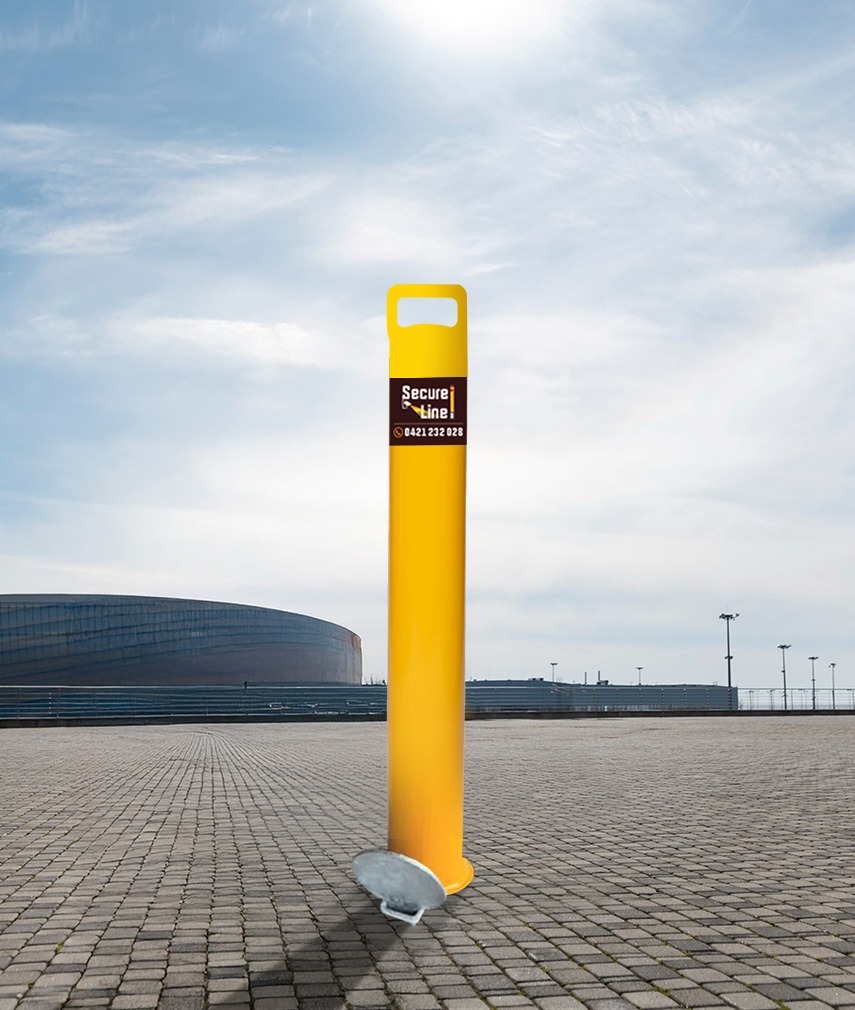
Perfect for areas where occasional access is needed. These bollards can be taken out when required but remain locked and reliable when in place. They’re popular in car parks, shared residential driveways, loading docks, and multi-use spaces.
2.2 Types based on locking options
| Lock Mechanism | Best For | Key Benefit |
|---|---|---|
| Yellow Sleeve lock | Budget-friendly sites | Simple and effective |
| Black Sleeve lock | Commercial spaces | Flush finish when removed |
| Premium Sleeve lock | High-security areas | Controlled access and clean look |
Choose strength and impact rating suitable for your risk level
Impact resistance is not one-size-fits-all. For low-risk areas such as pathways and storage yards, standard bollards work well. For heavy-purpose areas such as retail shopfronts or fuel depots, high-impact bollards are recommended.
Ask yourself:
- Can a vehicle reach a high speed near this point?
- Is the asset behind the bollard costly or critical?
- Would a collision create an environmental or safety risk?
Your answers determine the grade of bollard you should consider.
Think about access & daily use
Security is not the only factor; convenience also matters. Think about who needs to operate the bollard, how often, and under what conditions.
- For sites with rotating tenants or staff, keyless padlocks can reduce administrative hassle.
- For commercial retail access, keylocks provide strong control.
- For car parks and shared driveways, sleevelock bollards keep the ground flush when removed, making it safe for pedestrians and cars.
If trucks and forklifts operate near the bollard, you’ll want a design that stands up to constant workplace movement.
Australian weather can test steel quickly. Choose bollards manufactured from durable, reliable steel with powder coating to resist rust, fading, and corrosion.
Look for:
- Hot-dip galvanised steel
- Powder-coated finish
- Anti-tamper fixtures
The location of the bollard plays a role too. Coastal suburbs benefit from marine-grade finishes, whereas busy CBD areas need abrasion resistance from heavy foot and vehicle traffic.
A strong bollard is only as strong as its installation. Poor footing or incorrect placement can lead to failure. For areas containing post-tension cables, electrical lines, water lines or gas pipes, concrete scanning services are strongly recommended to prevent costly damage and ensure compliance.
Correct spacing and positioning are also essential for:
- Disability access compliance
- Pedestrian walkways
- Loading dock access
- Emergency exits
Professional installation eliminates guesswork and improves bollard lifespan and reliability.
Use this simple pre-purchase checklist:
- What security level do I need?
- Fixed or removable?
- Which lock mechanism suits the site? (padlock / sleevelock / keylock)
- Does the bollard require high-impact protection?
- Does the property need occasional access?
- Do I need concrete scanning before drilling or coring?
- Is the finish suitable for outdoor Australian conditions?
If you can confidently answer these questions, you’re well on your way to choosing the right bollard for your property.
Bollards play a major role in long-term property safety, and selecting the right model prevents expensive headaches later. Choosing the right bollard becomes straightforward once you understand security level, material strength, access needs, and locking preferences.
For expert support across bollards, locking styles, and installation, including concrete scanning, you can count on a trusted specialist like Secure Line.